Objective
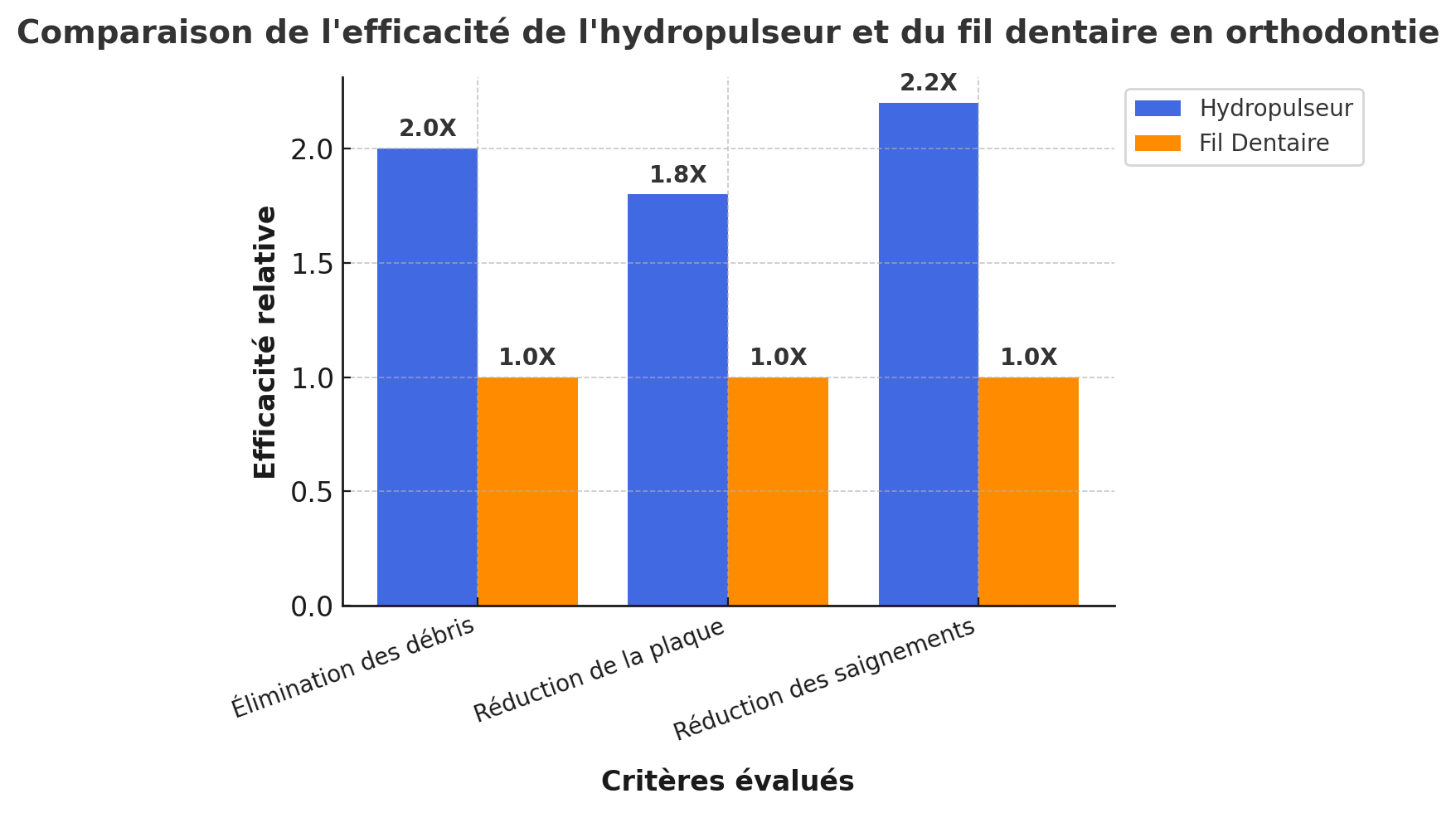
This systematic review examines the effectiveness of water flossers compared to dental floss for patients wearing fixed orthodontic appliances, with a focus on the removal of bacterial plaque, interdental debris, and the reduction of gingival bleeding.
Methodology
The study by Maslamani et al. (2023) analyzed several clinical trials comparing the impact of water flossers and dental floss in patients undergoing orthodontic treatment. The researchers evaluated various parameters, including plaque accumulation, gingival bleeding, and the effectiveness of interdental cleaning.
Results: Significant effectiveness of water flossers
The conclusions of the review indicate that the water flosser is highly effective for the oral hygiene of orthodontic appliance wearers:
- Removal of interdental debris: The water flosser facilitates the removal of food residues and plaque around brackets and orthodontic wires, an area where dental floss is often difficult to use.
- Reduction of bacterial plaque: Water flossers have demonstrated a better ability to limit plaque accumulation compared to dental floss in orthodontic patients.
- Improvement of gingival health: A significant reduction in signs of inflammation and gingival bleeding has been observed with the use of water flossers.
- Ease and comfort of use: Unlike dental floss, which can be difficult to manipulate with an orthodontic appliance, the water flosser offers a more practical and effective alternative for cleaning interdental spaces.
Conclusion
The results of this systematic review confirm that the water flosser is an effective and well-suited solution for wearers of orthodontic appliances. Its regular use improves gum health, reduces plaque accumulation, and facilitates the cleaning of hard-to-reach areas.
Scientific source
Maslamani M, Alhasson H, Alhajeri H, et al. Effectiveness of Water Flossers in Orthodontic Patients: A Review of Studies. Brazilian Journal of Integrative Health Sciences. 2023. Read the study