Objective
This systematic review aims to compare the effectiveness of water flossers and dental floss in removing interproximal plaque and reducing gingival inflammation in adults.
Methodology
Researchers analyzed seven randomized controlled trials identified in scientific databases such as PubMed, Scopus, and Cochrane. The selected studies compared dental plaque removal after using a water flosser or dental floss, in addition to daily brushing.
Results
The results show the superiority of the water flosser in several aspects of oral hygiene:
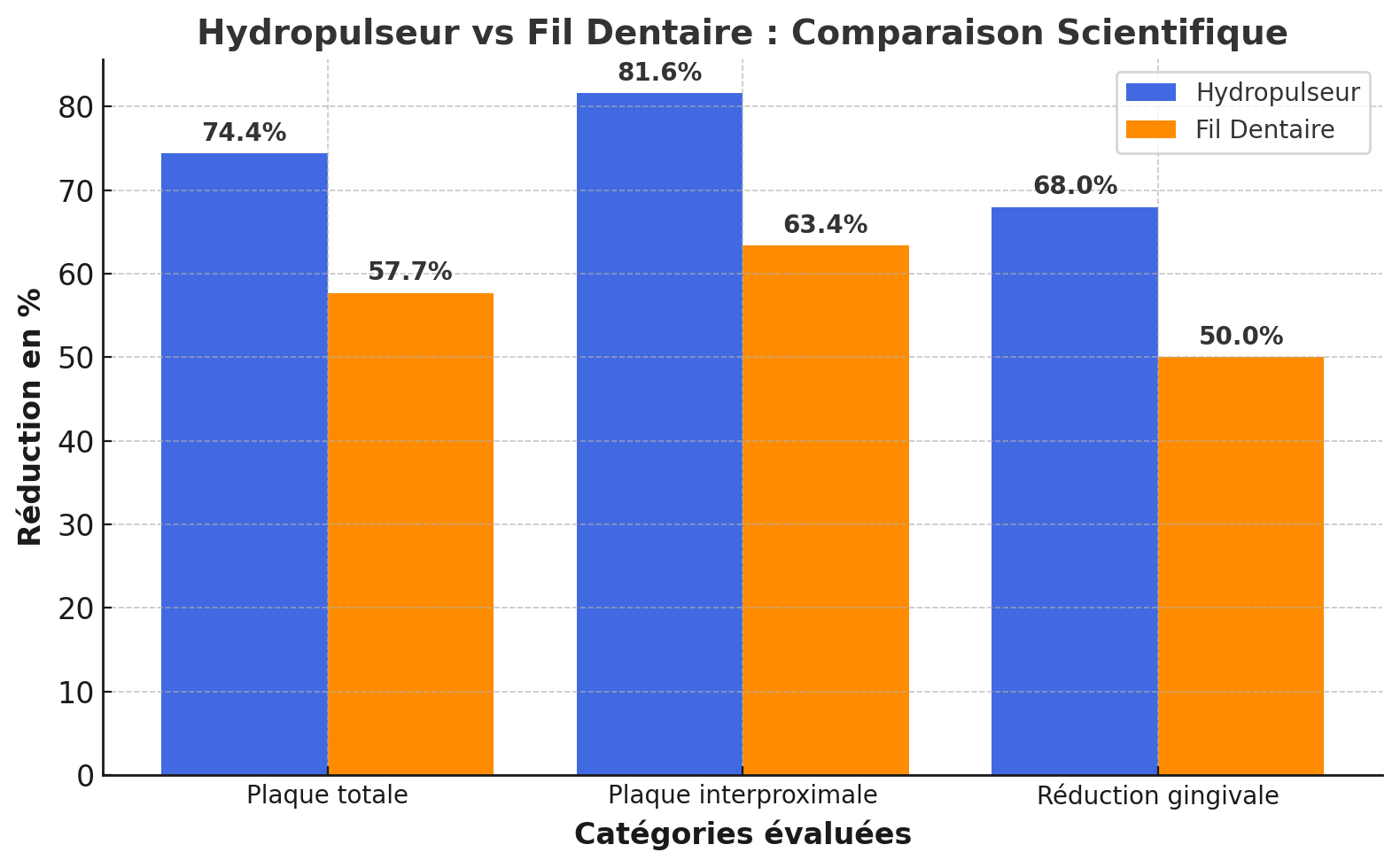
- Overall plaque reduction : 74.4% on average and up to 99.9% in some cases with the water flosser, compared to 57.7% with dental floss on average.
- Interproximal plaque removal : 81.6% for the water flosser versus 63.4% for dental floss.
- Reduction of gingival inflammation : More pronounced improvement among water flosser users.
The water flosser allows for more effective removal of debris and plaque in hard-to-reach areas, which can contribute to better prevention of periodontal diseases.
Conclusion
The water flosser is an effective alternative to dental floss for removing dental plaque, particularly in interdental spaces where brushing alone is insufficient. Its use is especially beneficial for people who have difficulty handling dental floss, experience pain when using it, or are seeking a faster and more practical solution for their oral hygiene routine. It is also suitable for wearers of orthodontic appliances, implants, or dental prostheses, for whom interdental cleaning can be more complex. Although its effectiveness has been demonstrated, the water flosser does not replace brushing but is an essential complement for better prevention of periodontal diseases and optimal oral health.
Scientific sources
Mohapatra S, Rajpurohit L, Mohandas R, Patil S. Comparing the effectiveness of water flosser and dental floss in plaque reduction among adults: A systematic review. J Indian Soc Periodontol. 2024;27(6):559–567. PMCID: PMC10906797